Brevard rethinks mental health support for first responders
While most of Brevard County sleeps, many first responders are still wide awake — stepping into car wrecks on dark highways, entering homes where a tragedy has just unfolded, and making split-second decisions that can alter lives forever.
They are trained to stay calm, professional and in control, even as the weight of what they witness quietly accumulates.
In Brevard County, a growing focus on mental wellness is reshaping how those on the front lines learn to carry stress and protect their own well-being — from peer-led programs to therapy dogs and mental health resources built into the job.
Why firefighters keep asking, “Where’s the dog?”
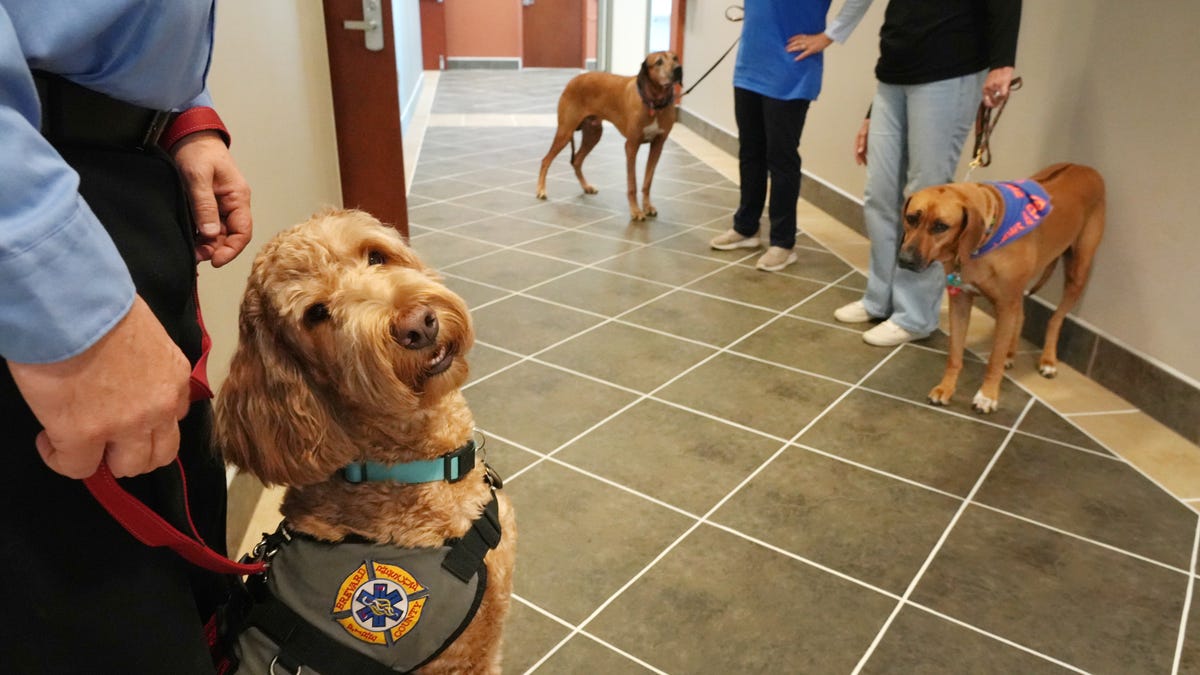
Rigs, the newest member of the Melbourne Fire Department, doesn’t carry a hose or respond to calls — but he has the uncanny ability to lift spirits on even the hardest days.
Rigs is the department’s first therapy dog, and he’s tasked with helping firefighters cope with the difficult and often tragic incidents they respond to on a regular basis.
Lieutenant Kayla Burri seized the opportunity to bring a therapy K9 onboard after attending a fire convention where she noticed the booth everyone wanted to visit was the one with all the dogs, more specifically, therapy K9’s for first responders.
After some negotiation, training and paperwork, on Dec. 12, 2025, Rigs joined the department’s peer support team — a group of trained firefighters who provide peer-to-peer counseling and support.
“Rigs naturally lowers stress and creates a sense of comfort that allows people to open up when they might not otherwise,” Burri said. “Part of our job on peer support is to help break down the ‘tough person’ stigma that lingers in the fire service and create an environment where it’s safe.”
The stigma, she explained, is driven by a fear of appearing “weak,” and the concern that acknowledging emotional struggles could carry professional consequences.
“When you see our ‘tough’ firefighters laying on the ground talking to the dog in their baby voice, you see it happening,” Burri said. “Every shift I show up without him, is a day of answering where he is and why he isn’t there.”
Research consistently shows that first responders — from hospital emergency staff and crisis clinicians to firefighters and law enforcement officers — face elevated rates of trauma-related mental health symptoms compared to the general public.
Roughly one-quarter to nearly one-third of these professionals develop symptoms of post-traumatic stress, depression, anxiety or other behavioral health challenges as a result of repeated exposure to traumatic events. Ongoing exposure is linked to burnout, emotional exhaustion, and a higher risk of substance use and suicidal ideation.
Supporting the caregivers who support children
Sometimes, just finding time to decompress with colleagues makes a difference.
As a licensed clinical social worker and director of the Children’s Advocacy Center of Brevard, Jeanie Raciti leads an organization focused on preventing and investigating child abuse and neglect. Each day, she and her team work closely with children who require sensitive, trauma-informed care.
“Self-care is very important,” Raciti said. “We talk about it as an organization and as a team.”
As part of their routine, the team incorporates activities such as potlucks and outdoor walks.
“We’ve had picnics, bowling, escape rooms and painting,” Raciti said. “Our therapists on board are a great resource, and we also do yearly training on burnout and resiliency.”
Mental wellness behind the badge
Local law enforcement agencies in Brevard County increasingly recognize that the emotional toll of police work — from responding to violence and fatal crashes to frequent encounters with people in crisis — can accumulate over time.
The Melbourne Police Department maintains a Peer Support Group and a Critical Incident Stress Management (CISM) team, both designed to help officers process traumatic events and manage ongoing stress. Peer supporters are trained in active listening and regularly check in with colleagues after serious incidents, while the CISM process brings together peers, chaplains and mental health practitioners to debrief officers after major trauma such as officer-involved shootings or fatal accidents.
At the county level, law enforcement personnel are supported by benefits like a 24-hour employee assistance program and access to fitness facilities aimed at overall well-being.
Officers also have access to confidential peer-support hotlines such as CopLine, which connects them with active and retired law enforcement officers who are familiar with the unique challenges of the profession.
How Health First helps staff cope with the hardest moments
Health First runs hospitals and emergency centers in Melbourne, Palm Bay, Viera and Cape Canaveral. As one of Brevard County’s largest employers, staff members face trauma on a daily basis.
Chaplain Derly Foerste, Health First’s director of spiritual care, said the most common trauma is loss of life, including pediatric deaths, ICU patients, deaths from accidents or violence — and the loss of coworkers.
To help alleviate the impact, “Team Lavender” was formed, a program to support staff members going through difficult or traumatic events.
“After critical incidents, such as patient deaths, debriefers meet with staff to provide support and help them process what happened,” Foerste said. “It’s named after the lavender flower, which symbolizes calm and peace.”
Joelle Boccabella, manager of volunteer services for Health First’s Community Hospitals, said caregivers often build close relationships with patients over time, which makes losses especially devastating.
In addition to Team Lavendar, Health First also has a therapy dog program which brings specially trained volunteer dogs and handlers into their facilities to provide comfort, stress relief, and emotional support for staff — as well as patients and visitors.
“After a loss of life, having the therapy dogs come in really helps our staff,” Boccabella said. “In those moments, there often aren’t words that make things better, but the dogs offer comfort in a way people can’t. We’ve seen many times where the dogs naturally go right to the team members who need it the most, without anyone guiding them.”
Florida law broadens access to peer support for first responders
Beyond internal support, there are broader Florida initiatives aimed at mental health resources for first responders and their families.
In April 2025, Florida lawmakers unanimously passed House Bill 421, the “Peer Support for First Responders” law, which expands the definition of “first responder” to include certain support personnel, such as crime-scene and evidence technicians, allowing them access to formal peer support services.
The Florida Department of Financial Services is working with state lawmakers to develop a comprehensive mental health and peer support program — and in January 2025, Florida’s Chief Financial Officer and State Fire Marshal Jimmy Patronis requested $3.6 million from the state to support it.
“First responders face unique challenges daily, dealing with traumatic situations that can impact their mental health,” Patronis wrote in his request. “Unfortunately, our first responders see suffering every day and it has led to an increase in issues like PTSD and suicide rates among these brave individuals.”
This reporting is supported by a Journalism Funding Partners grant. Mental Health Reporter Jennifer Torres can be reached at [email protected].
link