Destigmatizing Men’s Mental Health
In the United States, men are less likely than women to seek help for mental health issues, access behavioral healthcare, or receive a mental health diagnosis. Without treatment and care, men are more likely to utilize unhealthy coping mechanisms including substance abuse, self-harm, or aggressive behaviors. According to the Centers for Disease Control and Prevention, men die by suicide at a rate four times higher than women and while men make up 50% of the population, they account for nearly 80% of all suicides. Additionally, men are more likely than women to use illicit drugs and die due to alcohol-related causes.
These statistics are a stark reminder of the reality facing millions of men and the devastating consequences of stigma surrounding men asking for help or seeking out mental health services. According to Brett Hart, PhD, Vice President of Behavioral Health and Mental Health Parity at Blue Cross and Blue Shield of Minnesota, “Men are certainly susceptible to the same factors that create stigma in any individual, such as fear of judgment by others, or an unjustified sense of shame about needing help. However, unique to men are sociocultural expectations that they should ‘tough it out,’ ‘get over it,’ or ‘be a man’.”
Societal norms and expectations can send the message that men don’t need therapy or that asking for help is an act of weakness. From a young age, many boys are taught that expressing their emotions or vulnerability are antithetical to masculinity. This can create a significant barrier to seeking much needed mental health treatment and support.
Doctor Kotatee Tamba, Doctor of Psychology and Licensed Independent Clinical Social Worker, sees this everyday in his work. “Societally, there’s a persistent myth that ‘real men’ handle their problems independently,” said Doctor Tamba. “Media often reinforces this, portraying male heroes as silent, tough, and emotionally detached. As a result, many men fear that going to therapy means admitting failure or weakness. From a mental health perspective, this stigma is dangerous. It invalidates emotional pain, isolates men, and delays or entirely prevents them from seeking support.”
In his practice, Doctor Tamba has seen a rise in men experiencing social isolation and performance pressures. “There is an unspoken epidemic of performance pressure to succeed professionally, provide, and always appear in control,” said Doctor Tamba. “This pressure can lead to anxiety, burnout, or feelings of inadequacy. In some cases, it pushes men toward substance abuse or even suicidal ideation, which is tragically reflected in the fact that men die by suicide at significantly higher rates than women. Furthermore, men often suffer in silence when dealing with trauma, grief, or body image issues, all topics that are not typically ‘allowed’ to be part of the male narrative. Social media has only amplified the comparison trap, making men feel like they are not measuring up.”
Michael Harris, a Licensed Psychologist practicing at the Indian Health Board, has observed similar trends. “Emotional isolation, shame, and unspoken expectations are some of biggest issues impacting men’s mental health,” said Harris. Both Harris and Doctor Tamba have seen how social expectations of men harm or limit their ability to name and connect with their emotions. “Often times, men may not recognize emotional distress for what it is,” said Harris. “They say they’re tired, angry, checked out, or that their partner thinks they’re not present. But under that, it’s usually emotional overload without any language to name it.” Doctor Tamba feels that many men struggle with identifying their emotions due to emotional suppression learned early in life.
Mental health is closely intertwined with physical health. Individuals who are struggling with their mental health are at an increased risk for developing chronic conditions such as diabetes, heart disease, and stroke. Avoiding and delaying care for mental health has serious and life-threatening consequences that carry ramifications for individuals, families and society at large.
According to Hart, it’s estimated that nearly 32 million men in the U.S. are suffering from a mental illness, which directly impacts their ability to be productive at work, fully participate and enjoy family life, and appropriately care for dependents. “In addition to the devastating effects of mental illness on individual men, a society cannot function optimally when 32 million of its citizens are not able to fully participate because they are struggling with a mental illness,” said Hart.
Men’s mental health is not simply an individual issue. Rather, it is a matter of community health and critical to our collective wellbeing. Unresolved trauma, suppressed emotions, and isolation can significantly increase cycles of violence, self-harm, and disease in our communities. When men receive the mental health support they need, we all benefit. “When men thrive emotionally, everyone benefits, including partners, children, coworkers, and society at large”, said Doctor Tamba. “Addressing men’s mental health is not a favor to men; it’s a necessary investment in the well-being of everyone.”
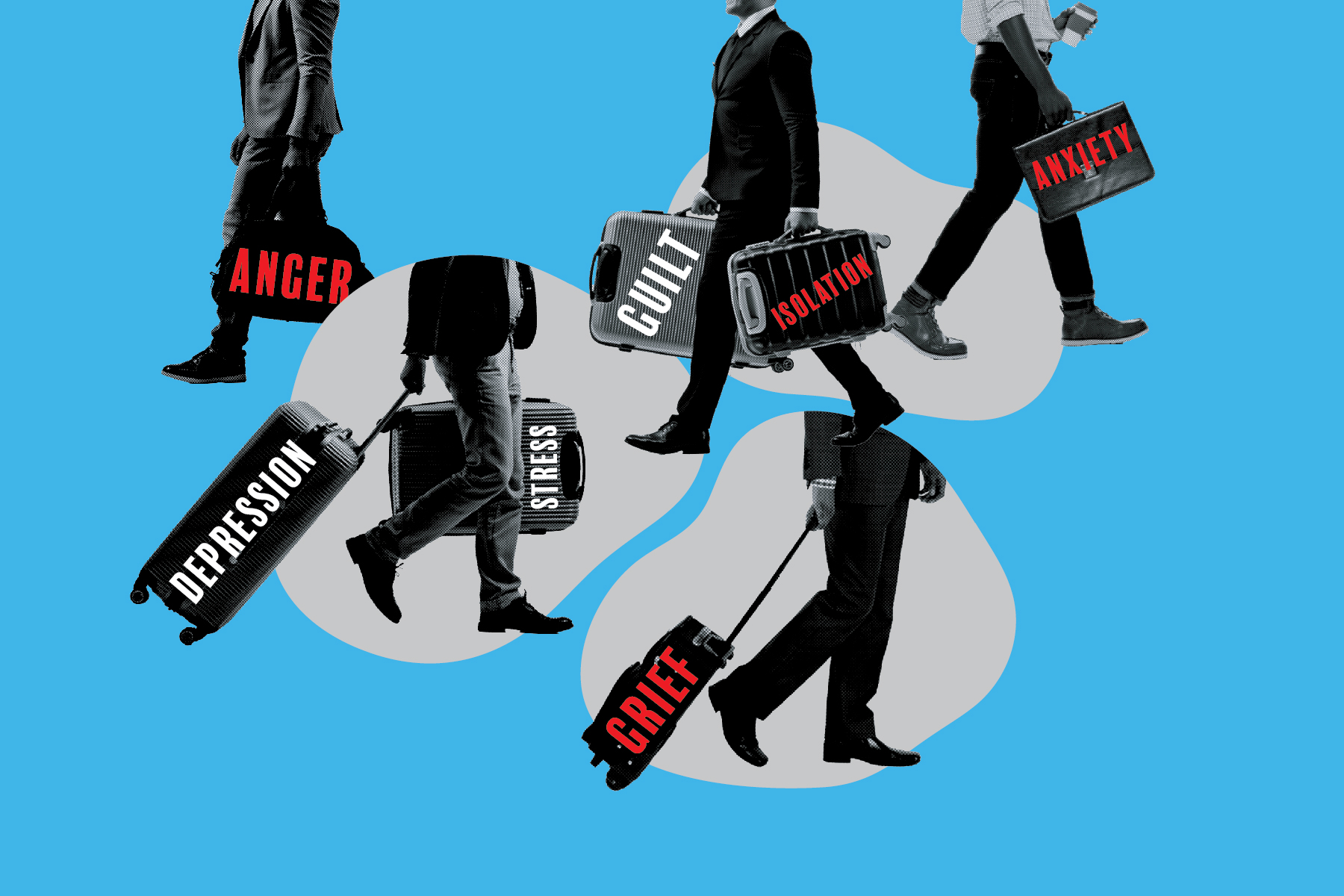
Many people find that being vulnerable and taking the first step to ask for help is the hardest part. Societal pressures, internalized messages about masculinity, and fear can coalesce for many men when first considering therapy. No one should carry the burden of depression, anxiety, or isolation alone. Therapy is a critical and life-saving resource that can give all people the tools to create a better life, disrupt multigenerational cycles of dysfunction, and build a healthier future.
“There is no shame in wanting to feel better. It’s one of the most self-respecting things you can do,” said Doctor Tamba. “Therapy can be intimidating, especially if you have been taught not to talk about your feelings. I want to tell that apprehensive man that seeking help does not make you weak; it makes you courageous. It takes real strength to face your pain and try to understand yourself better.”
If you or a loved one need immediate support, please reach out for help. You can call:
988 Suicide & Crisis Lifeline – Dial 988
Local Minnesota Crisis Lines
Free and Confidential Treatment Referral Helpline: 1-800-662-HELP (4357)
Crisis Text Line: Free help is available 24/7 by texting HOME to 741741 or texting AYUDA for help in Spanish.
The Trevor Project at 866-488-7386
Minnesota Farm & Rural Helpline at 833-600-2670
Charlie Health – Life Saving Care from Home
Little Otter – mental health care for the whole family
MORE SPONSORED CONTENT BY BLUE CROSS AND BLUE SHIELD OF MINNESOTA

Sponsored Content
Minnesota communities are done waiting on the FDA, taking the commercial tobacco fight to the local level
The Vadnais Heights city council recently voted unanimously to adopt a revised Commercial Tobacco Ordinance, which adds them to the growing number of Minnesota communities that are actively working to restrict or prohibit the sale of flavored tobacco products, including menthol. Currently, 26.2% of Minnesotans are covered by a flavored tobacco policy due to the…

Sponsored Content
An Innovative Approach to Addressing Food Insecurity on Campus
For college students, nutrition plays a critical role in determining health outcomes, wellbeing and academic performance. All students deserve the right to healthy, affordable and culturally relevant foods, but in Minnesota many students are struggling with consistent access to food on college campuses. According to University of Minnesota School of Public Health, one in every four…

Sponsored Content
Why supporting early childhood care and education is essential – in Duluth and across Minnesota
Families and child care and early learning providers throughout the Duluth area are sounding the alarm about the ongoing child care shortage in Minnesota, sharing that it is at a crisis point. This comes after recent announcements that three child care providers in the area will close in the coming weeks – the YWCA Early…
link