


![[Editor’s Column] Silencing playgrounds, eroding children’s health < Opinion < Article](https://cdn.koreabiomed.com/news/thumbnail/202604/31469_34019_4211_v150.jpg "[Editor’s Column] Silencing playgrounds, eroding children’s health < Opinion < Article")
During the work-from-home days of the Covid-19 pandemic, I remember hearing young children screaming and crying through my windows from the kindergarten right next to my house. Rather than being an annoying or disturbing noise, they sounded more like joyful music to me. They were a constant reminder that those small, curious children were experimenting with life through outdoor activities — poking at leaves, smelling cherry tomatoes in the garden, running as fast as they could, sometimes tripping and crying, but getting up again to try again.
Recently, however, I came across troubling news: a significant number of Korean elementary schools are closing their playgrounds during lunch breaks and after-school hours. This is because they have received an overwhelming number of complaints from adults claiming that children are making too much noise while playing soccer or baseball. Some grown-ups living in apartments near a school playground even called the police to stop the school from holding its annual sports day event.

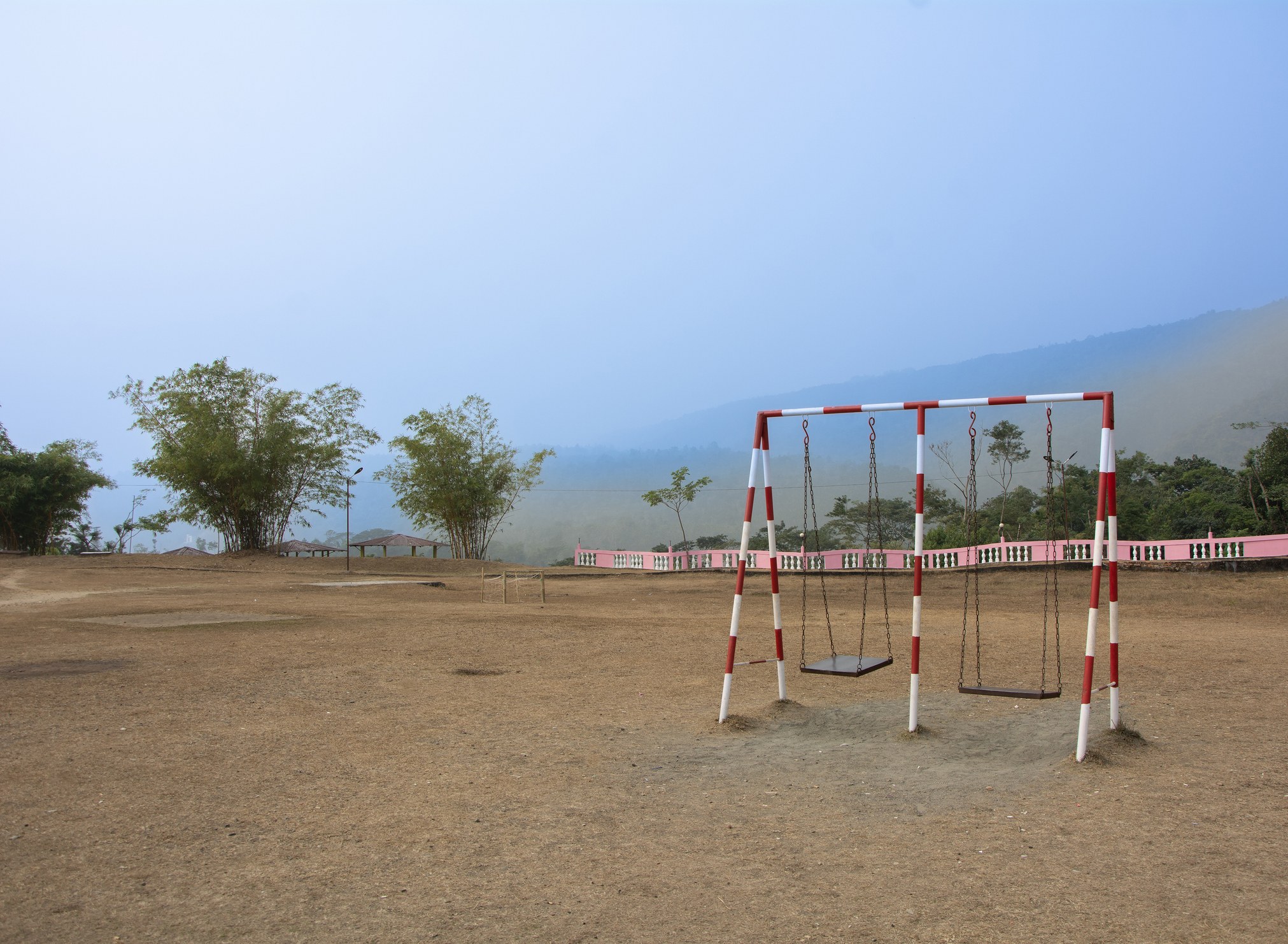
If Korea wants to ensure the physical and mental well-being of future generations, as well as their resilience to hardship, it is urgent that we not only allow but also do everything in our power to actively support that all children use playgrounds.
At the very least, elementary school students must have the opportunity to run and play before they are pushed into the relentless grind of Korea’s notoriously competitive university entrance system. The social instincts, physical stamina, resilience, and stress-coping habits they develop between the ages of 6 and 12 go on to shape how they face life itself.
According to data from Rep. Chun Ha-ram of the Reform Party, 312 out of 6,189 elementary schools nationwide (5.04 percent) ban activities such as soccer and baseball during lunch and after-school hours, with the trend more pronounced in large cities. The share reaches 16.7 percent in Seoul and 34.7 percent in Busan, and is rising year by year. These figures reflect only complete bans, meaning the actual number of schools restricting play is likely much higher when partial limits are included. Last year, police were dispatched in 98.5 percent of 350 complaints related to school sports days — turning what should be a once-a-year celebration into a matter of enforcement.
In fact, school playgrounds and those in our neighborhoods are much safer than they were in the past. Nowadays, the floors are designed with soft materials so that children do not get hurt badly when falling, unlike the sandy, rock-strewn grounds of earlier decades. Yet despite these improvements, children’s play is being restricted not because it is dangerous, but because it is deemed too loud. If the environment is safer than ever, why are we silencing the very activities it was designed to support?
Pediatricians have also raised concerns. In an April 22 statement, the Korean Pediatric Society said schools should be the safest places for children to run and play, yet excessive safety concerns and mounting complaints are instead hindering their physical and emotional development. It stressed that play with peers is not optional but essential — supporting physical health, emotional stability, social skills, teamwork, and stress relief — while warning that fear of complaints and lawsuits is discouraging teachers from allowing normal activities. The group urged legal safeguards to protect teachers and cautioned that blanket bans on games like soccer or dodgeball risk infringing on children’s rights, recommending practical alternatives such as safer equipment, designated zones, staggered playtimes, and supervision.
The increasing proportion of playground bans is particularly worrisome because children from lower-income brackets often have no other place to play sports. Meanwhile, those with affluent parents can enjoy structured, adult-led sports programs at private clubs. When the school playground — a public space open to all children — loses its social value and is left empty, it is a tragic waste of societal resources.
After the pandemic, my teenage son would come home from an hour of intense boxing training, soaked in sweat and grinning, shouting, “I need a shower!” In those moments, I felt grateful — not just that he was healthy, but that he was fully alive, testing his limits, pushing his body, and finding his place in the world.
But not every child has access to structured training like this. For many, the playground is the only place where that kind of physical and emotional growth can happen.
The sound of children running, shouting, falling, and getting back up is not noise. It is one of the ways children learn to test themselves, recover, and grow — whether through sports or simply through play. In a country facing the world’s lowest birthrate and fastest aging population, it is a sound that should be cheered, not silenced.
The real question is not whether we can tolerate that noise. It is whether we are willing to accept the alternative — the silence of children who no longer run, no longer shout, and no longer test themselves.
If I have to choose between the two, I would choose the noise. Every time.

Kim Yoon-mi is the managing editor of Korea Biomedical Review. She can be reached on X at @YoonmiKim or by email at yoonmi@docdocdoc.co.kr. — Ed.
link